How to tell
Look at the water heater and under sinks. Polybutylene is flexible plastic pipe, usually grey, sometimes blue or black, typically marked PB2110, joined with crimped bands rather than soldered. It is not the same as modern PEX, which is also flexible, so the marking matters.
Why polybutylene replacement happens at all
The material degrades from the inside over time, and failures tend to be sudden rather than a slow drip. Beyond the water damage itself, many insurers now treat polybutylene as a condition on a policy, and it is routinely raised at the point of sale. Whatever your view of the risk, it is a question you will be asked eventually.
What replacement involves
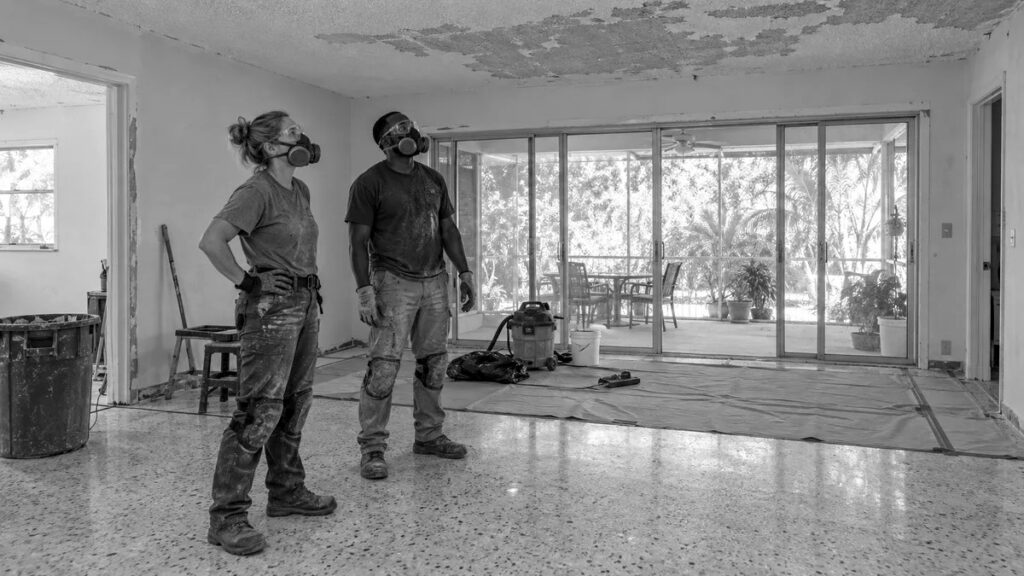
Polybutylene replacement means new supply lines throughout, generally PEX or CPVC, permitted and inspected under the Florida Building Code, run through walls and ceilings and tied back into every fixture, then the drywall repaired and repainted. The pipe is not the expensive part. Access and making good is.
Which is exactly why it belongs in a renovation. If walls are coming down for a kitchen, a bathroom or a whole-home project, the marginal cost of repiping at the same time is a fraction of doing it alone.